
Start the San Mateo Resident Search
Start with whatever clue you can actually check. An address points to the county property portal or GIS. A named party fits the ACRE grantor-grantee index. A registered voter can confirm personal status through the Secretary of State tool. A court name belongs in the San Mateo Superior Court MIDX index. Older household digging shifts to library shelves and newspaper archives. Treating the San Mateo resident search as a chain works better than trusting any single record. No one document proves identity, title, and occupancy together.
Take each result as a lead and test it. An assessor parcel can show a situs and an APN. It can also show assessed values and a released mailing contact. A mailing address still does not prove the named owner lives there. A deed names a transaction party, not every person at the property. A reverse directory may list a resident who never held title. Those limits are why a careful resident lookup beats a long list of unverified names.
- Search the County Property Information Portal or GIS by a normalized address. Save the APN, situs, jurisdiction, and any map or recorded-document cue.
- Use the APN and current parcel clue to identify the relevant deed or recorded instrument, then note its grantor, grantee, date, and document number.
- Check MIDX for a court name or case number, and use its wildcard option when a spelling or initial may vary.
- Use My Voter Status only for the voter’s own status, or contact Elections about a lawful Elections Code purpose.
- Move backward through city directories, the San Mateo Times, census schedules, Schellens abstracts, and a focused records request when an online trail ends.
One chain ties the threads together. It covers owners, parties, listed occupants, family links, and public affiliations without ever treating them as the same fact.
San Mateo Resident Records Offices
San Mateo County runs records through an ACRE structure. That joins the Assessor, County Clerk-Recorder, and Elections under one roof. Each desk answers a different question, though. The Recorder's grantor-grantee index pinpoints instruments and the parties behind them, while the Assessor ties an APN to a situs, its assessment context, and a map. Elections keeps its registration file narrow on purpose. The Superior Court, libraries, and state portals sit outside that chain.
San Mateo County Recorder
555 County Center, 1st Floor
Redwood City, CA 94063
650-363-4500
Recorder Division, ACRE
San Mateo County Assessor
555 County Center, 3rd Floor
Redwood City, CA 94063
650-363-4500
Assessor and Property Information Portal
San Mateo County Elections
40 Tower Road
San Mateo, CA
650-312-5222
registrar@smcacre.gov
ACRE public counters open Monday through Friday, 8 a.m. to 5 p.m. Marriage-license service stops at 4:30 p.m. Walk-ins depend on capacity, so appointments are encouraged. For Recorder and Assessor questions, call 650-363-4500.
The ACRE County Clerk-Recorder page is the local record starting point for grantor-grantee research and Recorder counter details.
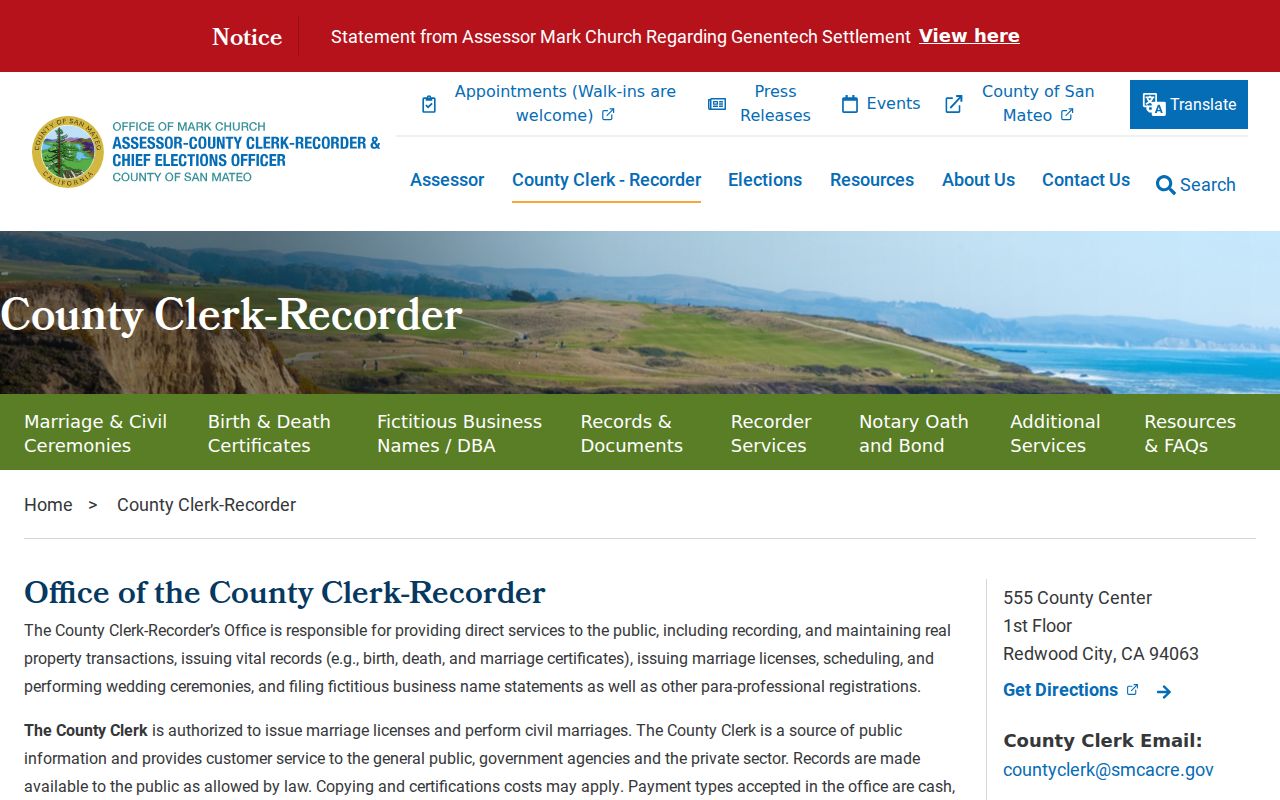
Use the index for a lead, then ask the Recorder for the image, certified copy, or older book reference that fits the research question.
Note: The Redwood City counter is the practical fallback when an online index omits an older volume or does not expose a needed field.
Which San Mateo Record Fits
San Mateo keeps no single master file of residents. The right record depends on the question you bring. Property proof begins with the parcel. Court matters run through MIDX. Family events sit with the Recorder or CDPH, under copy rules. A business filing can help pin down an identity, though a filed business address is not a dwelling.
| Record path | Useful clue | Keeper | Access shape |
|---|---|---|---|
| Assessment and GIS | APN, situs, jurisdiction, values, map context | ACRE and County GIS | Address or parcel search |
| Recorded instruments | Grantor, grantee, date, document type, legal description | ACRE Recorder | Free index; copy or image through the custodian |
| Superior Court index | Case number, party role, category, filing date | San Mateo Superior Court | MIDX first, Odyssey or clerk for more |
| Vital records | Birth, death, public marriage, or dissolution clue | County or CDPH | Informational and authorized rules differ |
| Business and license files | Entity, agent, license status, public contact | SOS or DCA | Free online index with board limits |
| Historical collections | Past address, household, obituary, or family link | Libraries and archives | Onsite shelves, catalogs, and licensed databases |
Work in that order whenever an address is the starting clue. When you already know the person, take the name-search route first. Then anchor what you find with an APN, a case number, a relative, a business tie, or a date sequence. Address-driven and historical searches have their own street directory pages. A single-person question belongs on the resident lookup route.
| Official custodian records | Commercial compilation services |
|---|---|
| Identify the office, record series, date range, and access rule. | Combine purchased and public data with unknown refresh timing. |
| Provide a citation, index key, or copy request path. | May merge people with similar names or old addresses. |
| Keep lawful personal research tied to the record’s stated use. | Do not treat a compiled result as certified evidence. |
San Mateo Directory Property Fields
Start with the parcel search for any San Mateo address. County GIS and ACRE materials describe search by address or APN, map navigation, an identify tool, and parcel and jurisdiction layers. Enter the number with its street name. Normalize the suffix and direction. Preserve the exact APN that comes back. The recent Property Information Portal upgrade aims to streamline property information, tax assessment, and parcel-document access, and active parcel datasets are exported daily.
| Field or control | Type | What it does |
|---|---|---|
| Search / Address | Autocomplete text | Finds a parcel from number and street; normalize suffix and direction. |
| APN | Text | Uses the county parcel identifier, with punctuation tested in the live viewer. |
| Map navigation | Pan and zoom | Browses streets and neighboring parcel polygons. |
| Identify / select parcel | Map click | Opens parcel attributes and available links. |
| Layers | Checkbox panel | Shows parcels, jurisdictions, boundaries, and available reference layers. |
| Measure, basemap, print | Toolbar controls | Provides map context or output; exact controls vary by viewer version. |
- Parcel
- A mapped land unit with a county identifier, often the APN.
- Situs address
- The taxable site address. It is not the same as a tax mailing address.
- Legal description
- The formal land description in a deed or map, such as a lot, block, tract, or older boundary call.
- Index
- A pointer to a record. The image or certified copy carries fuller proof.
A property result can list APN, situs, and jurisdiction. It can also show land and improvement values, total assessed value, tax-year context, geometry, and linked maps. The tax-mailing contact is not proof of occupancy. Resolve the parcel first. Then turn to the Recorder's party index or whichever record family answers the question. County GIS details and parcel downloads are available through the San Mateo County GIS resource. The linked portal is a routing tool, not a resident roster.
The ACRE assessor services image shows the property-search starting point for a San Mateo address workflow.
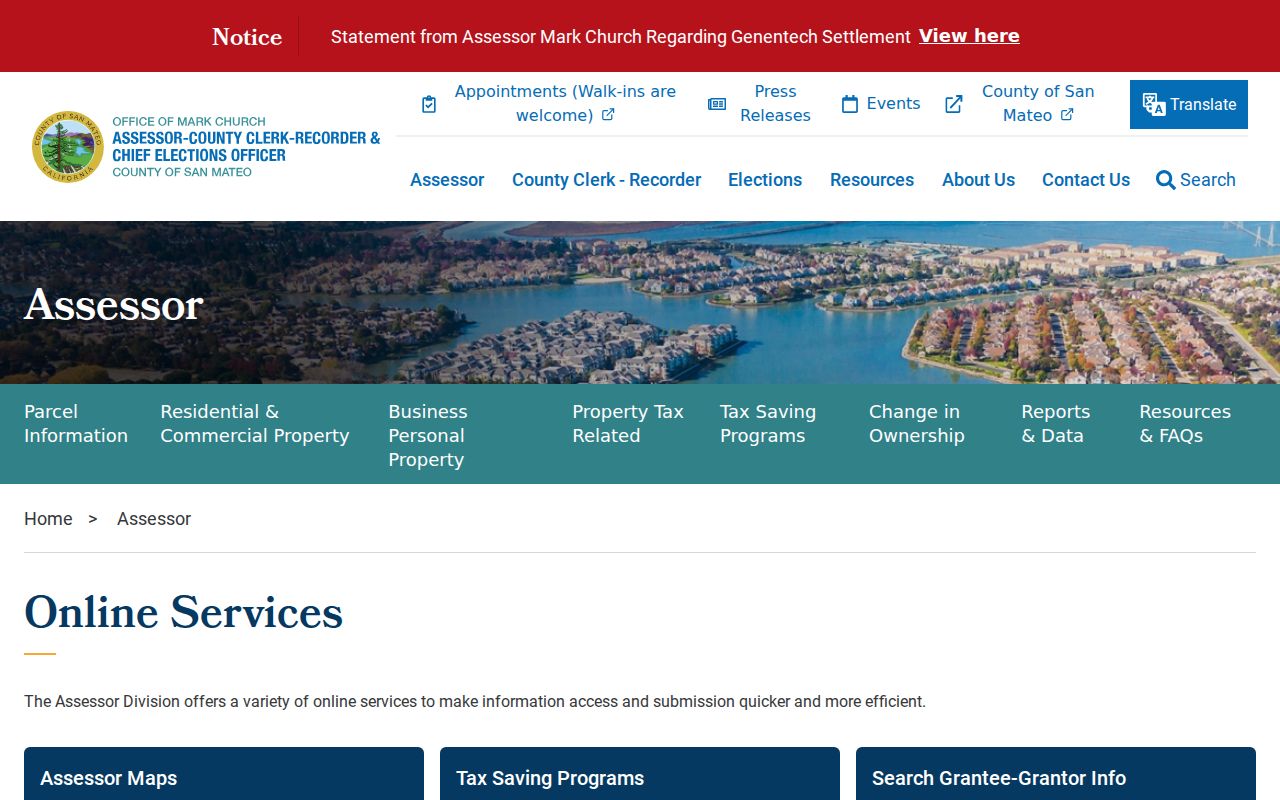
Use the parcel result to capture the APN and jurisdiction before drawing conclusions from any name or mailing field.
Current San Mateo Resident Directories
Current lookups in the San Mateo residents directory pull from several places. Each place proves something different. ACRE ties a name to a recorded transaction or a property parcel. Elections handles voter rolls. A voter may confirm personal status or release an extract only where California law permits. MIDX gives a court index with case entries. Libraries round things out with current newspapers and licensed genealogy tools. The table keeps those roles separate. A San Mateo resident lookup lands on the right record type.
| Source | What it can show | Keeper | Access |
|---|---|---|---|
| Property Information Portal | APN, situs, jurisdiction, assessment context | ACRE / GIS | Free parcel or address entry point |
| Grantor-grantee index | Recorded parties and instruments | ACRE Recorder | Free start; images or copies through office |
| My Voter Status | Personal registration, districts, ballot information | California Secretary of State | Private identity match |
| MIDX | Case number, party role, filing date, case category | San Mateo Superior Court | Free index; Odyssey or clerk for fuller access |
| Libraries and local indexes | Obituaries, directories, newspapers, yearbooks | San Mateo libraries and SMCGS | Branch, onsite, card, or member access varies |
| SOS and DCA searches | Business entities, license status, public contacts | California state agencies | Free online tools with scope limits |
A San Mateo residents directory result earns its weight from citation detail. Keep the source, date, and record key with every hit. A court index entry needs its case number. A deed needs an instrument number or image request. A business hit needs the entity number. A historical obituary needs the newspaper date and page. Those keys let any later researcher walk back to the custodian.
Note: A public contact directory for a city role can confirm an official position, but it is not residential evidence.
San Mateo Resident Directory Voter Limits
My Voter Status works as a personal check. It is not a public San Mateo County residents directory. Enter a first and last name, date of birth, and, when matching requires it, a California driver license or ID number or the last four digits of an SSN. What comes back is private: registration status, party preference, districts, vote-by-mail and ballot status, and election details. The identity fields themselves are never published.
Elections Code §2194 controls wider release. Voter rolls serve election, scholarly, journalistic, political, or governmental purposes only. The file itself can carry a name, residence and mailing address, registration date or status, party preference, precinct and district fields, and participation history. Signatures stay sealed. So do full identification numbers, protected addresses, and Safe at Home addresses. A lawful request goes to San Mateo County Elections, 40 Tower Road, or 650-312-5222, or registrar@smcacre.gov. Bring the current purpose certification, with the fee confirmed in advance.
For checking your own registration, My Voter Status is the right door. It will not build a neighborhood list. Historical great registers are a different resource, best approached through libraries, archives, or Schellens extracts.
The My Voter Status form shows why a private identity check must stay separate from a voter-file request.
Use Elections for the governing access question, and never republish a purpose-limited voter extract as a general resident list.
San Mateo MIDX Adds a Court Trail
MIDX earns its place when the trail leads to a court party, though it is only an index and not the full file. Search modes cover Case Number, Person, Business, and Filing Date. Person mode needs at least two characters in the first and last name fields. An asterisk works as a wildcard for tricky spellings. Filing-date searches span a five-day window at most. Expect periodic refreshes rather than a live file. Treat any result as index data, then follow the case number onward.
| Search field | Required / format | Use |
|---|---|---|
| Case Number | Mode-dependent; minimum five alphanumeric characters | Best stable key for a clerk or Odyssey request. |
| First Name / Last Name | Required in person mode; minimum two characters; append * | Test initials, spelling variants, and wildcard endings. |
| Business Name | Required in business mode; minimum three characters; append * | Find an entity or organization party. |
| Date From / Date To | MM/DD/YYYY; filing window no more than five days | Narrow a known filing period. |
A typical result lists the case number, caption, party names and roles. Case type and filing date appear too. It may also show whatever events or index data the system exposes. Odyssey may layer on a register of actions, hearings, and dispositions. Documents themselves often sit elsewhere. Addresses may be absent. Medical or financial attachments, juvenile material, sealed cases, and protected identities may also be missing. Write down the case number before approaching the clerk or Odyssey.
The San Mateo Superior Court MIDX search is the county court entry point for a resident verification trail.
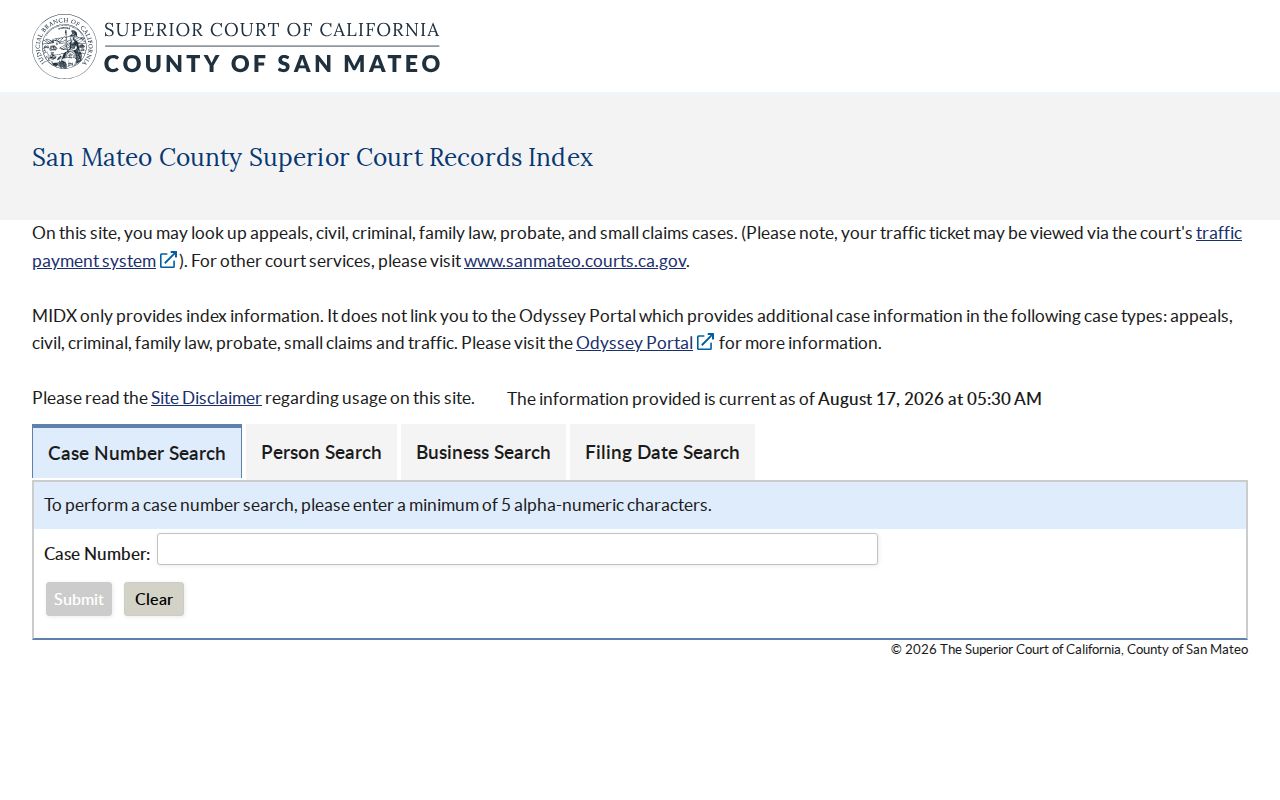
Use the case number to ask for the right register or copy, because the index alone does not establish every event in the file.
Federal cases live outside MIDX. Civil, criminal, bankruptcy, and appellate names run through PACER and the Northern District systems instead. Keep a federal result labeled federal, and verify it under its own case number and document rules.
San Mateo Vital Copy Choices
A vital record can confirm a relationship or an event. California opens no universal age gate, however. Birth, death, and public-marriage records reach a broader set of requesters as informational copies, while authorized copies that establish identity demand a qualifying relationship and a sworn statement. Confidential marriage copies go only to the parties or by court order. Adoption records follow sealed-record procedures of their own.
| Record | Custodian | Access distinction | 2026 CDPH fee |
|---|---|---|---|
| Birth | County Recorder or CDPH | Informational versus authorized copy | $31 |
| Death | County Recorder or CDPH | Informational versus authorized copy | $26 |
| Public marriage | County Recorder or CDPH | Informational versus authorized copy | $19 |
| Confidential marriage | County Clerk | Party or court-order path | Statutory fee |
| Dissolution certificate | CDPH; court holds file | Narrow certificate, not the full decree | $18 |
The county marriage application captures the requester's name, signature, residence, and contact details, plus copy type, Party A and Party B names, the marriage date and place, and the stated relationship. An older county fee schedule lists $17 for a marriage copy. Confirm the current fee before sending payment. County and CDPH mail and counter procedures differ from each other. For a mailed authorized request, the sworn statement must be notarized.
The California Vital Records overview provides the state fallback when a San Mateo event needs a statewide custodian.
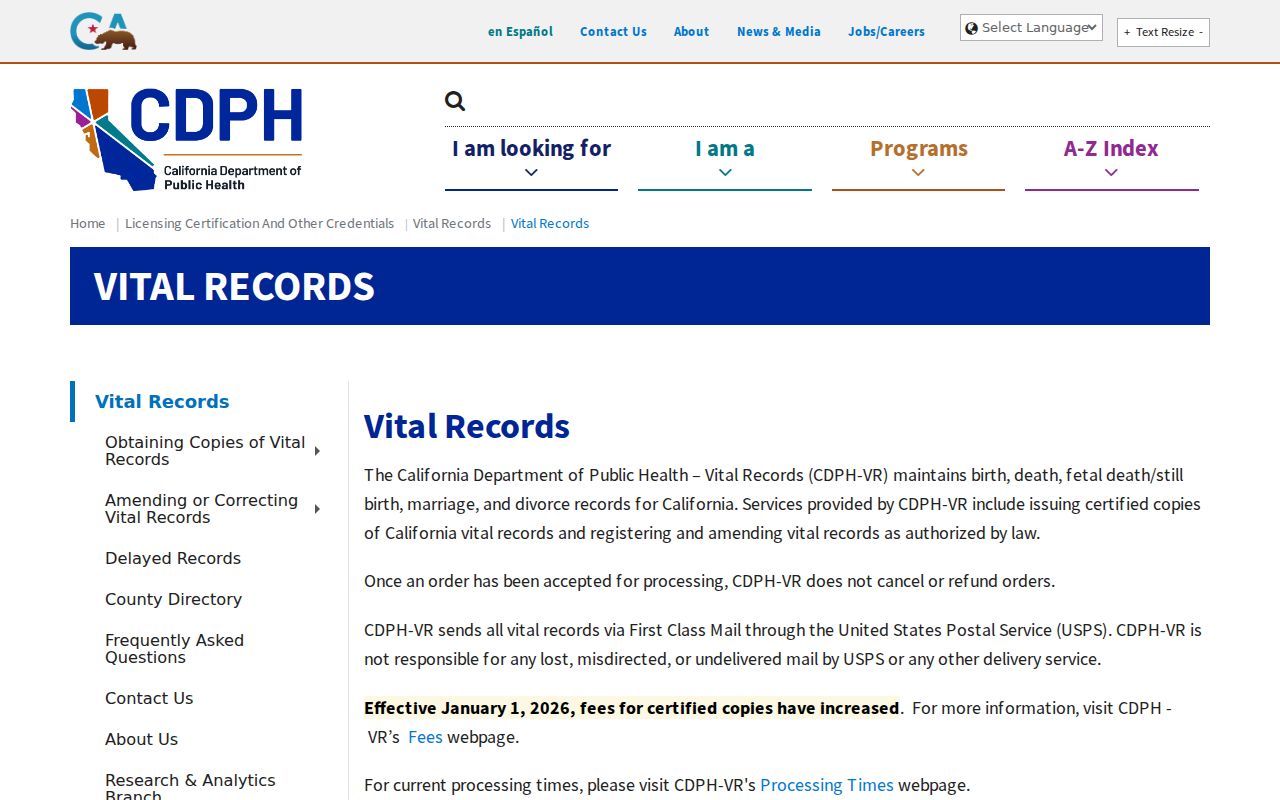
Choose the copy type before ordering, and retain the event date, place, relationship, and payment details for a clear request.
Note: A certificate copy can document an event while an obituary, directory, or deed supplies the separate address clue.
Redwood City’s San Mateo Records Cluster
Redwood City anchors the county's record-keeping. As the county seat, it gathers several paths into one walkable cluster. ACRE sits at 555 County Center, and the Superior Court's Hall of Justice stands nearby. The restored Old Courthouse now houses the San Mateo County History Museum. Redwood City Public Library rounds out the cluster with county-history holdings. When a web search dead-ends, the next step may be a counter index, a clerk retrieval, or a library shelf. An archive appointment in the same research region can work just as well.
The county itself dates to 1856, carved from San Francisco County territory. Older land and court facts can therefore rest in pre-1856 San Francisco material. Rancho-era files may hold them too. Spanish or Mexican land-grant and federal patent records can also carry them. Current parcel maps and daily exports coexist with paper books and microfilm. Card catalogs and hand abstracts remain part of the mix. Respecting those layers gives the record trail its depth. No modern portal covers every year.
San Mateo Library Sources Beyond Web Search
The San Mateo Public Library California Collection holds city directories from 1907 to the present. The run spans Polk, Haines, and other publishers. Reference staff will search by personal name, business, or street. The same collection keeps San Mateo Times microfilm from 1901 and Gazette and News Leader runs. It also holds 1920s and 1930s Sanborn maps, local map drawers, and mid-century clipping files. Reference help is available at 650-522-7818 or smplref@plsinfo.org.
San Mateo County Libraries widens the net. Ancestry Library Edition runs inside branches or on branch Wi-Fi. HeritageQuest and HeritageHub serve remote users with qualifying card prefixes. HeritageHub's obituary and death-notice coverage stretches from 1704 to the present. Each channel has its strengths. A licensed database may surface a name, while a physical shelf reveals a missing year, an abbreviation key, a street section, or a local newspaper page. A licensed database may surface a name. A physical shelf may reveal a missing year, an abbreviation key, a street section, or a local newspaper page.
The San Mateo Public Library California Collection points researchers to the local shelf. That shelf covers directories, newspapers, maps, and clipping files. Call ahead about missing volumes, reverse sections, and reproduction rules. Ask also which Peninsula branch holds another city's run.
San Mateo’s Schellens Research Bridge
The Schellens Collection links a current name search to San Mateo County's older paper trail. Richard Schellens built it by hand. He pulled names from directories, great registers, county histories, books, and newspapers. Three Redwood City real-estate volumes stand out. They carry hand-drawn maps plus Official Record references. SMCGS databases add early court minutes, lis pendens, judgment abstracts, jury lists, mortuary indexes, patent and deed registers, Sheriff sales, and tax sales.
This quirk makes San Mateo family research unusually traceable. A hand abstract can turn a vague surname into a book, page, case, or instrument citation, even when the collection itself is not name-indexed online. Treat the index as a finding aid. It is no substitute for the custodian's original. Write down the exact citation first. Then ask SMCGS, the Historical Association, or the County repository about reaching the underlying book or file.
Colma's mortuary and cemetery records add one more endpoint. The Driscoll books number 109 volumes, from the 1890s into the early 2000s, and SMCGS is still indexing them. An obituary or mortuary result can hint at relatives, dates, or a prior home. Only a vital certificate or cemetery custodian gives formal proof.
Historical San Mateo Resident Directories
San Mateo city directories work as a practical historical residents directory from 1907 onward. A 1905-1906 San Mateo City and County Directory reaches back even further. The California State Library catalog also lists Spaulding-Bonestell runs plus locality volumes. Polk and Haines editions often start with names in alphabetical order. Then they flip to a reverse, criss-cross section arranged by street and house number. One listing may record a spouse. It may also note an occupation, an employer, a telephone, an address, or a homeowner mark. Treat it as a clue, though, since a directory entry never proves title to property.
The wider city-directory shelf holds more than bound volumes. Digitized searches belong on it. So do the California Collection, SMCGS databases, Schellens abstracts, newspaper microfilm, and the Historical Association's PastPerfect catalog. PastPerfect is only a partial window. Most archive holdings still live in an onsite card catalog. The San Mateo city directory collections page lays out the full shelf and a tracing method. A current resident lookup treats the volumes as one historical layer beside deeds, census rolls, and obituaries.
Protected San Mateo Records Need Care
Safe at Home offers a substitute mailing address, mail forwarding, confidential voter registration, and protected dealings with agencies. It serves survivors and reproductive-health workers or patients who qualify. Courts keep sealed, juvenile, adoption, victim, and confidential files closed. DMV personal information has its own limits. A record may be public. That does not make a threat, doxxing, impersonation, or an effort to defeat a protected-address program lawful.
Lawful use. Use San Mateo records for family history, reconnecting, estate research, civic understanding, or personal safety awareness. Do not use a resident lookup to stalk, harass, intimidate, or harm anyone. Verify a result with the custodian before acting on it.
The California Public Records Act, codified in Government Code Division 10, gives any person the right to ask for an identifiable record that already exists. Exemptions apply. The agency usually decides within 10 days and can stretch that by 14 more when circumstances are unusual. Inspection is generally free. Copies cost the direct price of duplication unless a different statute sets the fee, and Government Code §7922.530 permits photographing records onsite within reasonable preservation and system limits. A sharp request names the custodian, the record series, a date range, an APN, a case number, or an instrument. Vague asks fail. An office will not compile a resident history for you. For the request process and the exemption list, consult the California Public Records Act guidance published by the Secretary of State.
Official San Mateo Specialty Lookups
A name search does not always require a residential directory. Several official portals resolve names through specialty records instead. The SOS bizfile system can surface an entity's name, number, formation date, status, agent, filed addresses, officers, managers, Statements of Information, and full filing history. DCA Search works differently. It filters by board, license type, license number, name, business, city, or county, then reports status, issue and expiration dates, public contact, and some disciplinary actions. The State Controller's unclaimed-property lookup takes a last or business name, first name, and city. Any hit there is only a possible match until the claimant proves entitlement.
The California SOS bizfile search image illustrates a business-affiliation path in a San Mateo identity lookup.
A filed business address may belong to an agent, office, or mailing location, so it must stay labeled as business evidence.
The California Department of Consumer Affairs license search image shows a second official way to disambiguate a name by board or license.
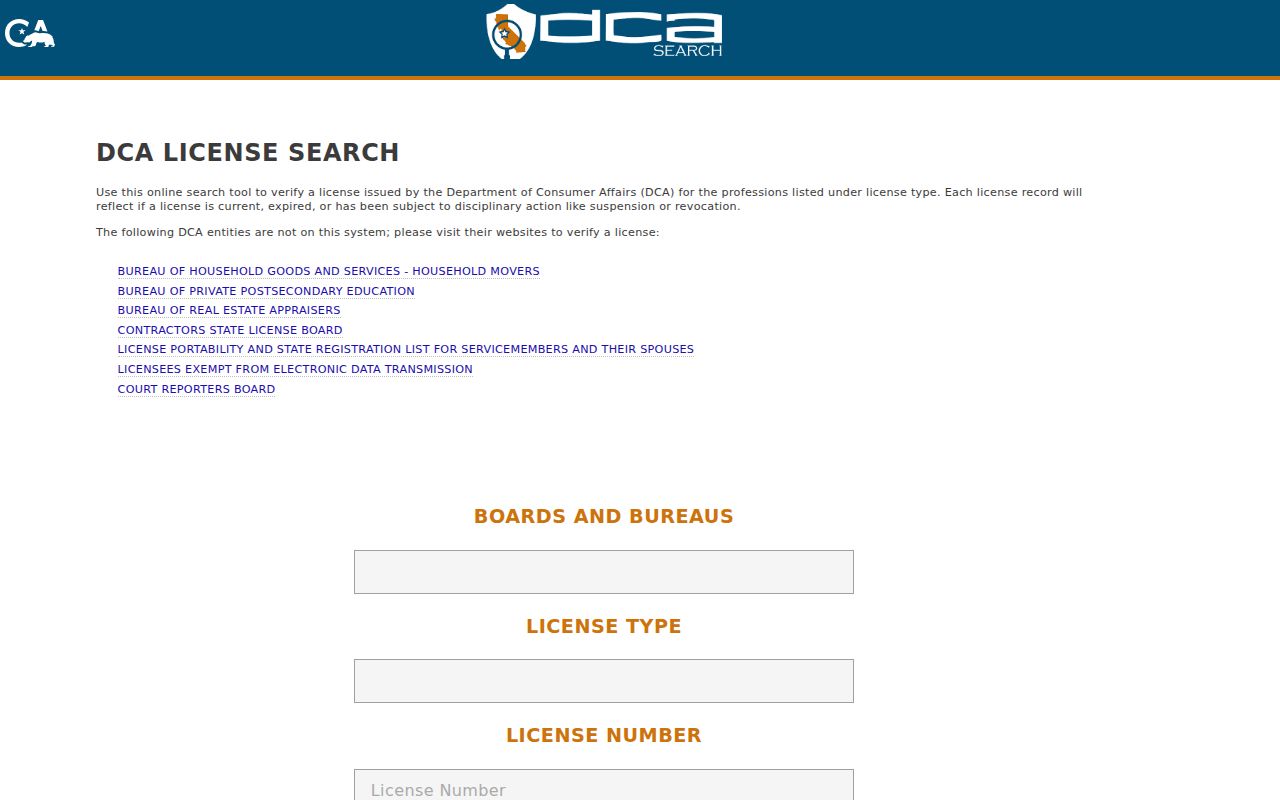
Open the detail record to see whether the license is current; a search hit alone is not enough.
San Mateo Records Changed in 2026
Recent changes matter to any San Mateo records search. CDPH fees rose on January 1, 2026. Birth certificates now cost $31, death $26, marriage $19, and dissolution $18. Older county PDFs may still list the prior marriage fee. So pull the current form before mailing payment. The County GIS page describes a recent Property Information Portal upgrade and daily parcel exports. ACRE reports a 2026-27 assessment roll above $357.6 billion, covering roughly 237,000 assessments per year. Meanwhile, MIDX now directs users to Odyssey for fuller case detail. Its refresh timestamp shows how an index can trail the clerk's complete file. None of this turns the county into one unrestricted directory. Instead, each change makes it smarter to save the date checked. Keep the portal used and the exact record key too.